
Diabetes touches millions of lives, and so do the choices around treating it. Some patients want strict medical care. Others look for gentler options. Many want both. This mix of interest is why homeopathy comes up often in diabetes conversations, right alongside standard medical care.
This post breaks down both approaches in plain terms. You’ll see how each one works, what the research shows, and how to make a safe choice for your health. If you’re searching for Type 2 Diabetes treatment in Parsippany, this helpful guide also covers what to look for in a doctor and when home remedies aren’t enough.

Homeopathy vs. Conventional Diabetes Treatment
What Is Conventional Diabetes Treatment?
Traditional treatment is a standard medical procedure. It is based on decades of clinical trials, lab tests and patient outcomes. Doctors use it because it has a clear track record of lowering blood sugar and cutting the risk of complications.
How Doctors Diagnose Type 2 Diabetes
A diagnosis starts with blood work. Doctors check fasting glucose, A1C levels, and sometimes an oral glucose tolerance test. These numbers tell your doctor how your body handles sugar over time, not just on one bad or good day.
From there, treatment gets built around your numbers, your weight, your age, and any other health issues you carry.
Common Conventional Treatments
Standard care usually involves a few tools, often used together:
- Metformin and other oral medications that help your body use insulin better
- Insulin therapy for patients whose bodies don’t make enough on their own
- A diet and exercise plan based on your daily blood sugar pattern
- Regular blood tests to monitor A1C and detect problems early
- Screening for complications such as eye exams and kidney function tests
In this method, diabetes is considered as a condition that can be measured. Your doctor makes changes to your plan based on lab results rather than estimates.
What Is Homeopathy for Diabetes?
Homeopathy is a system of medicine that originated in Germany more than 200 years ago. This is based on the idea that too much of a diluted substance can trigger the body’s own healing process. Practitioners choose drugs based on a thorough understanding of a person’s symptoms, not just the results of a single lab test.
Core Ideas behind Homeopathic Remedies
Homeopathy follows a principle called “like cures like.” A substance that causes symptoms in a healthy person, in tiny diluted doses, is believed to treat similar symptoms in a sick person. Remedies are chosen after a long talk about your habits, mood, sleep, and physical symptoms, not just your glucose readings.
Commonly Discussed Remedies
A few remedies come up often in homeopathic discussions around diabetes:
- Syzygium jambolanum, made from jamun seeds
- Uranium nitricum, sometimes used for thirst and frequent urination
- Cephalandra indica, another remedy tied to sugar-related symptoms
Practitioners often pair these with diet advice and lifestyle changes. The remedies themselves are not regulated or tested the way prescription drugs are.
Homeopathy vs. Conventional Treatment: Key Differences
Here’s a side-by-side look at how the two compare on the points that matter most.
| Factor | Conventional Treatment | Homeopathy |
| Basis | Clinical trials and lab data | Symptom pattern and individual case |
| Blood sugar tracking | Regular A1C and glucose tests | Not a core part of the process |
| Regulatory approval | FDA-approved drugs and insulin | Not approved for treating diabetes |
| Speed of action | Measurable changes within weeks | No confirmed timeline in research |
| Risk of complications if skipped | Managed through monitoring | Higher, since sugar isn’t tracked closely |
| Best used for | Direct blood sugar control | General wellness support, alongside medical care |
The biggest gap is measurement. Conventional care gives you a number to track. Homeopathy does not offer that same level of tracking, which matters a lot with a condition like diabetes.
What Does the Research Say?
This is the part patients ask about most, so here’s a direct answer: large, well-designed clinical trials have not shown homeopathy lowers blood sugar in a reliable way. Some small studies have reported improvements in symptoms, but they lack the size and robustness needed to draw firm conclusions.
Groups like the World Health Organization and the FDA do not list homeopathic remedies as approved diabetes treatments. That doesn’t mean patients can’t explore them. It means they shouldn’t replace insulin or prescribed medication without a doctor’s sign-off.
Diabetes left unmanaged can lead to nerve damage, vision loss, and heart disease. That’s why any complementary approach needs to sit alongside regular checkups, not instead of them.
Can You Use Both Together?
Many patients do combine the two. The safest way to do it looks like this:
- Keep taking prescribed medication or insulin as directed.
- Tell your doctor about any homeopathic remedies you’re using.
- Keep tracking your blood sugar at home, even if you feel fine.
- Watch for any changes in symptoms and report them right away.
- Treat homeopathy as a support, not a replacement.
Doctors would rather know what you’re taking than find out later. Being open about it keeps your care plan safe and complete.
Finding the Right Type 2 Diabetes Doctors in Parsippany
If you’re managing diabetes, your first step should be a doctor who checks your labs on a regular schedule. Good Type 2 Diabetes Doctors in Parsippany will do more than write a prescription. They’ll walk you through your numbers, explain your options, and build a plan around your daily life.
Look for a service provider that:
- Review your A1C and glucose trends at every visit
- Talk about making changes to your diet and activities that fit your daily routine
- Check for early signs of problems involving the nerves, eyes, or kidneys
- Adjusts your plan according to changes in your stats over time
- If you want to talk about complementary methods like homeopathy, they listen to you
A doctor who takes time to explain your results, instead of rushing through them, is worth the extra effort to find.
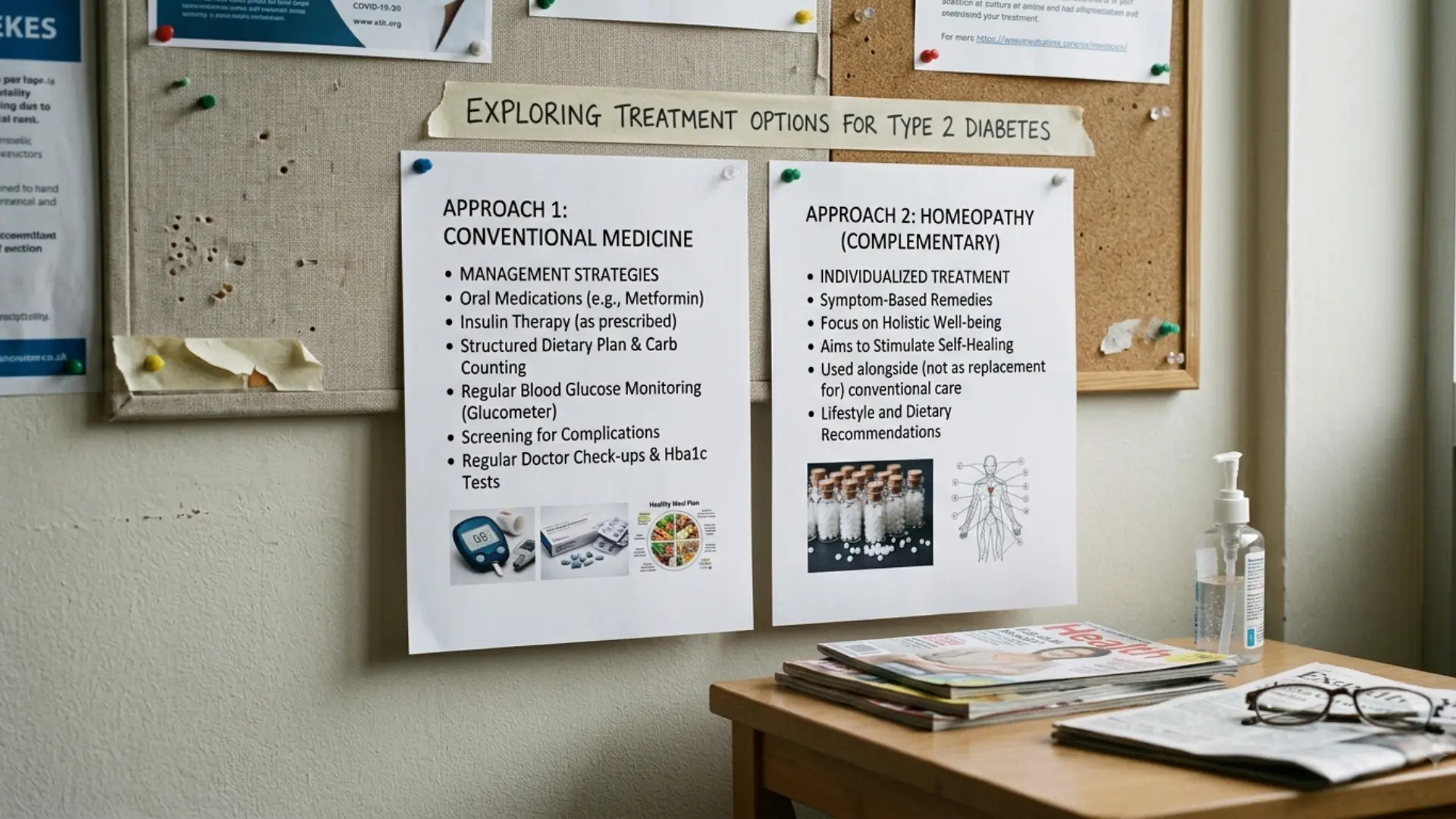
Homeopathy vs. Conventional Diabetes Treatment
When to Seek Diabetes Treatment in Parsippany Right Away
Some symptoms mean that you should not wait for the appointed time to see a doctor. Seek diabetes treatment in Parsippany without delay if you notice:
- Blood sugar readings that are too high or too low
- Sudden blurring of vision
- Numbness or tingling that is new or getting worse
- Cuts or wounds that are not healing
- Tiredness or excessive thirst
These symptoms point to a condition that requires medical treatment, not home remedies. Waiting too long can lead to a serious problem that is easily remedied.
Bottom Line
Homeopathy and conventional treatment come from two different worlds. One is built on lab data and tested drugs. The other is built on symptom patterns and individual case-taking. Research so far backs conventional care as the reliable way to manage blood sugar and avoid complications.
If you’re curious about homeopathy, that’s a fair thing to explore. Just keep your doctor in the loop and keep testing your blood sugar. For anyone looking for reliable diabetes treatment in Parsippany, start with a provider who keeps a close eye on your health statistics and treats your overall health, not just one symptom at a time.
Frequently Asked Questions
Q: Is it safe to stop insulin and switch to homeopathy?
A: No. Stopping taking insulin without consulting a doctor can lead to dangerously high blood sugar levels. Always check with your doctor before making any changes to your insulin.
Q: Do homeopathic remedies interact with diabetes medication?
A: There may be some impact, although data on this is limited. Always tell your doctor or pharmacist if you are taking any other medications.
Q: How often should I see a doctor for Type 2 diabetes?
A: Most patients need a checkup every three to six months, depending on how stable their blood sugar is. Your doctor will determine the right schedule according to your condition.
Q: What’s the first step if I think I have diabetes?
A: Check your blood. The fasting glucose or A1C test gives your doctor the information needed to diagnose the disease and start a treatment plan.
Q: Where can I find trusted Type 2 Diabetes treatment in Parsippany?
A: Choose a local clinic or doctor who has a good record of consistent diabetes care, not just one-time visits. Ask them about their methods of lab monitoring and long-term follow-up.
Disclaimer: This article is for general information only and isn’t a substitute for medical advice. Talk to your doctor before starting or stopping any diabetes treatment.