
Found black spots on bottom of feet? Learn the common causes, warning signs, when to see a doctor, and how a homeopathic doctor can help.
In this article:
- Quick Answer About a Black Spot on the Sole
- What Causes Black Dots Under the Feet
- Tiny Black Dots on Bottom of Foot and Warts
- Warning Signs That Need a Doctor Soon
- Why a Painless Black Spot on Bottom of Foot Still Matters
- What a Homeopathic Doctor Does at Your First Visit
- Painless Black Spot on Foot Treatment by Cause
- Where Homeopathy Fits and Where It Does Not
- Safe Home Care and Daily Foot Habits
- When to See a Doctor Today
- Frequently Asked Questions
- Final Thoughts
You look down and see a dark mark on your sole. It does not hurt. It does not itch. Still, it bothers you.
Many people find black spots on bottom of feet and wait weeks before asking anyone. That wait is the real risk. Most spots are harmless. A few are not. A good homeopathic doctor will tell you the first job is to learn what the spot is. Treatment comes second.
This helpful article explains the causes, the warning signs, and the right next step. It uses plain words and facts from skin and foot experts.
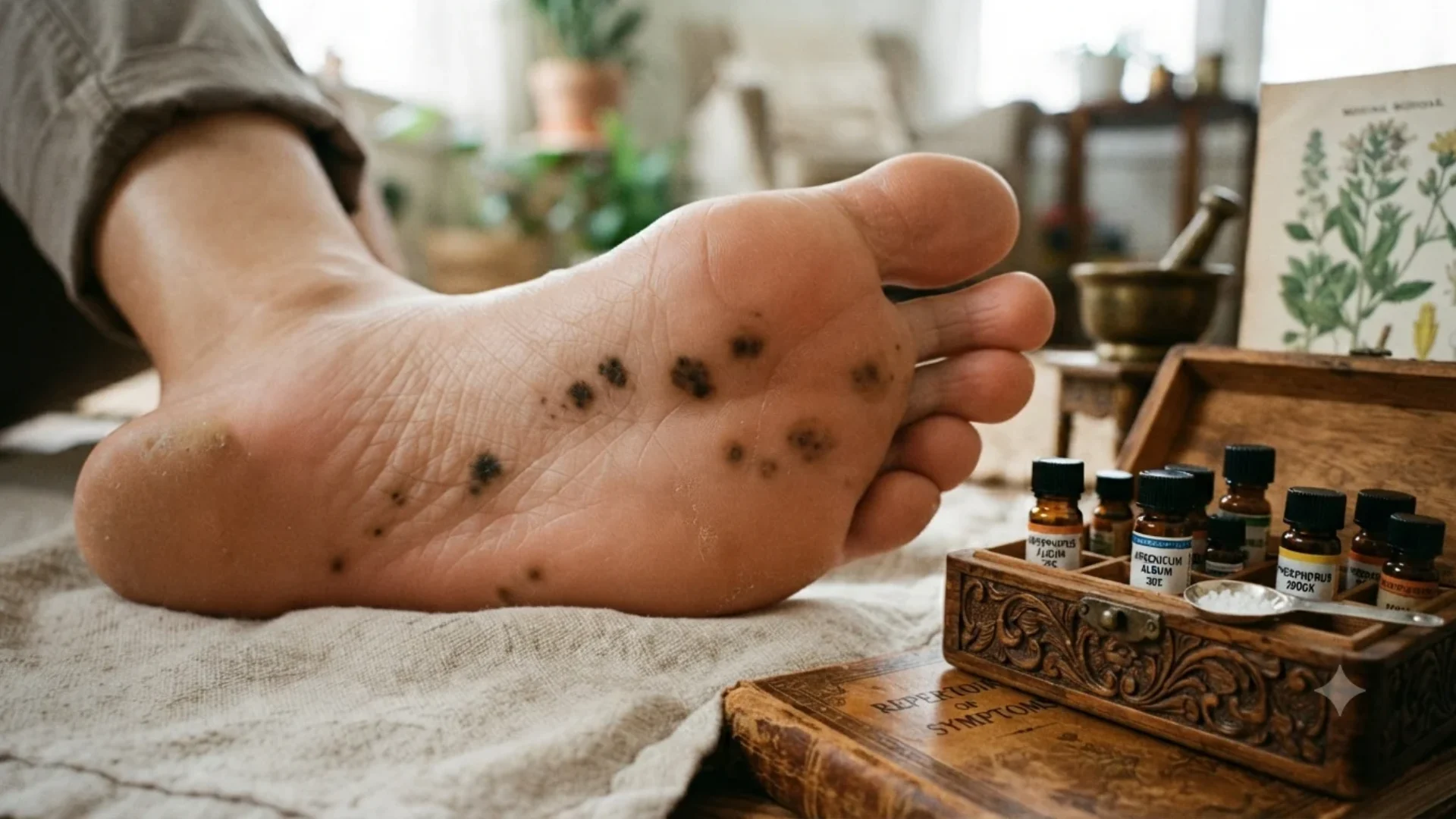
Painless black spot on bottom of foot
Quick Answer about a Black Spot on the Sole
Most black spots on bottom of feet come from blood under the skin, a wart, or a callus. Rarely, a dark spot is skin cancer.
A black spot on foot that grows, changes color, bleeds, or stays for more than a few weeks needs a skin exam. Do not wait for pain. Early skin cancer on the foot is often painless.
The American Academy of Dermatology says to see a board-certified dermatologist if you find a spot on your foot that could be melanoma.
What Causes Black Dots Under the Feet
Here is what causes black dots under the feet. Each cause looks a little different. Knowing the pattern helps you talk to your doctor.
Talon Noir (Black Heel)
Talon noir means “black heel.” It is a small bleed inside the top skin layer. Sudden stops and starts cause it. Runners, hikers, tennis players, and basketball players get it often.
- Flat black, brown, or purple dots
- Most often on the heel or sole edge
- Skin lines stay normal
- No pain
- Fades on its own in a few weeks
A doctor can gently shave the top skin layer. If the specks come off, it was old blood. A cancer spot does not scrape away.
Plantar Warts
A virus called HPV causes plantar warts. The tiny black dots inside are clotted blood vessels. These tiny black dots on bottom of foot look like seeds, but they are not seeds.
- Skin lines break around the wart
- Pain when you squeeze the sides
- Often on the ball or heel of the foot
- Pinpoint bleeding when shaved
Bruise or Blood Blister
A hard knock or tight shoe can trap blood under the skin. The spot starts red or purple and turns dark. It fades as the skin renews. A true bruise does not grow or spread.
Corn or Callus with Dried Blood
Thick skin can hide small bleeds. The spot sits inside a hard, yellow patch. Corns do not bleed when pared. Pressure and poor shoes are the usual cause.
Tinea Nigra
This is a rare fungus. It makes a flat brown or black patch, often on the palm or sole. It is harmless. A simple lab test on a skin scraping confirms it, and antifungal cream clears it.
Acral Melanoma
Acral melanoma is a skin cancer that starts on the palms, soles, or under the nails. AM is the most common melanoma type in people with dark skin. AM can also affect people of any skin color.
Acral melanoma is often painless at first. It may look like a wart, a callus, or a sore that will not heal. Many cases are found late because people assume the spot is harmless.
Poor Blood Flow and Diabetes
A dark crust or black patch on the heel or toe can mean tissue is not getting enough blood. People with diabetes may feel no pain because of nerve damage. This needs urgent care.
Tiny Black Dots on Bottom of Foot and Warts
Small dots in a rough patch often point to a wart. Here is a simple way to compare.
| Feature | Talon Noir | Plantar Wart | Melanoma |
| Skin lines | Normal | Broken | Often follow the lines |
| Pain | None | On squeezing | Often none early |
| Shaving the top | Specks wipe off | Pinpoint bleeding | Color stays |
| Change over time | Fades in weeks | Slowly grows | Grows or darkens |
This table is a guide only. Photos and home checks cannot replace a doctor’s exam with a dermatoscope.
Warning Signs That Need a Doctor Soon
Use the ABCDE rule for any dark spot on your foot.
- A is for asymmetry. One half looks different from the other.
- B is for border. The edge is uneven or blurry.
- C is for color. You see black, brown, red, or gray in one spot.
- D is for diameter. The spot is larger than a pencil eraser, about 6 mm.
- E is for evolving. It grows, darkens, bleeds, or changes shape.
Add these extra signs for the foot.
- A spot that appears where you once hurt your foot
- A dark line under a toenail
- A sore that does not heal in four weeks
- A spot that stays after you shave or scrub the skin
Any one sign is enough to book a visit.
Why a Painless Black Spot on Bottom of Foot Still Matters
People trust pain as an alarm. Foot cancers do not follow that rule. A painless black spot on bottom of foot can be a simple bruise. It can also be an early cancer.
Here is why no pain misleads.
- Early acral melanoma is flat and quiet
- Nerve damage from diabetes hides pain
- Thick sole skin dulls feeling
- Few people check the bottom of their feet
One published case described a woman who treated a foot lesion as a callus for months. It turned out to be melanoma that looked like a wart. Delay changed her outlook for the worse. The lesson is simple. Look at the spot. If you cannot name the cause, get it checked.
What a Homeopathic Doctor Does at Your First Visit
A BHMS doctor asks a few questions in the beginning and examines carefully. Come to our Parsippany (NJ) clinic, where our renowned doctor Devang Goswami will guide you every step of the way. A good visit includes all of these steps.
- History: When did you first see the spot? Has it changed? Did you hurt that foot?
- Health review: The doctor asks about diabetes, blood flow, family skin cancer, and past warts.
- Foot exam: Size, color, edges, and skin lines are checked in good light.
- Photos and notes: These give a baseline to compare at later visits.
- Referral when needed: A spot with warning signs goes to a dermatologist for dermoscopy or biopsy.
An honest homeopathic doctor does not guess. If the spot could be cancer, the doctor sends you for testing first. That is good care, not a sign of weakness in the system.
Painless Black Spot on Foot Treatment by Cause
The right painless black spot on foot treatment depends on the cause. Treating the wrong thing wastes time.
| Cause | Common Care |
| Talon noir | Rest, better shoes, moisturizer. It heals on its own |
| Plantar wart | Salicylic acid, freezing, or other doctor-led care |
| Bruise | Time and a softer shoe |
| Corn or callus | Padding and safe trimming by a trained person |
| Tinea nigra | Antifungal cream after a lab test |
| Melanoma | Biopsy and surgery by a skin or cancer specialist |
| Poor blood flow | Emergency care from a foot or vascular doctor |
Notice what is missing. No home cream or remedy removes skin cancer. Surgery and expert care do that work.
Where Homeopathy Fits and Where It Does Not
Homeopathy is a gentle system many families trust. It is also a system with limits. You deserve both facts.
Where it can help
- Time spent listening to your full story
- Care for foot comfort, dry skin, and recurring warts or corns
- Advice on shoes, hygiene, and daily habits
- Support alongside medical treatment, with your treating doctors informed
Where it does not replace medicine
- A dark spot that could be melanoma
- Signs of diabetes foot problems or poor blood flow
- Any spot that bleeds, grows, or changes fast
Homeopathic doctors often choose remedies for warts and corns, such as Thuja or Antimonium crudum, based on your whole symptom picture. Research has not shown these medicines work better than a placebo for warts. Many people still use them for comfort. Your doctor picks the remedy and strength. Never self-dose based on a blog.
No homeopathic remedy treats cancer. If a biopsy finds melanoma, surgery is the proven path. Early surgery gives the best outcome.
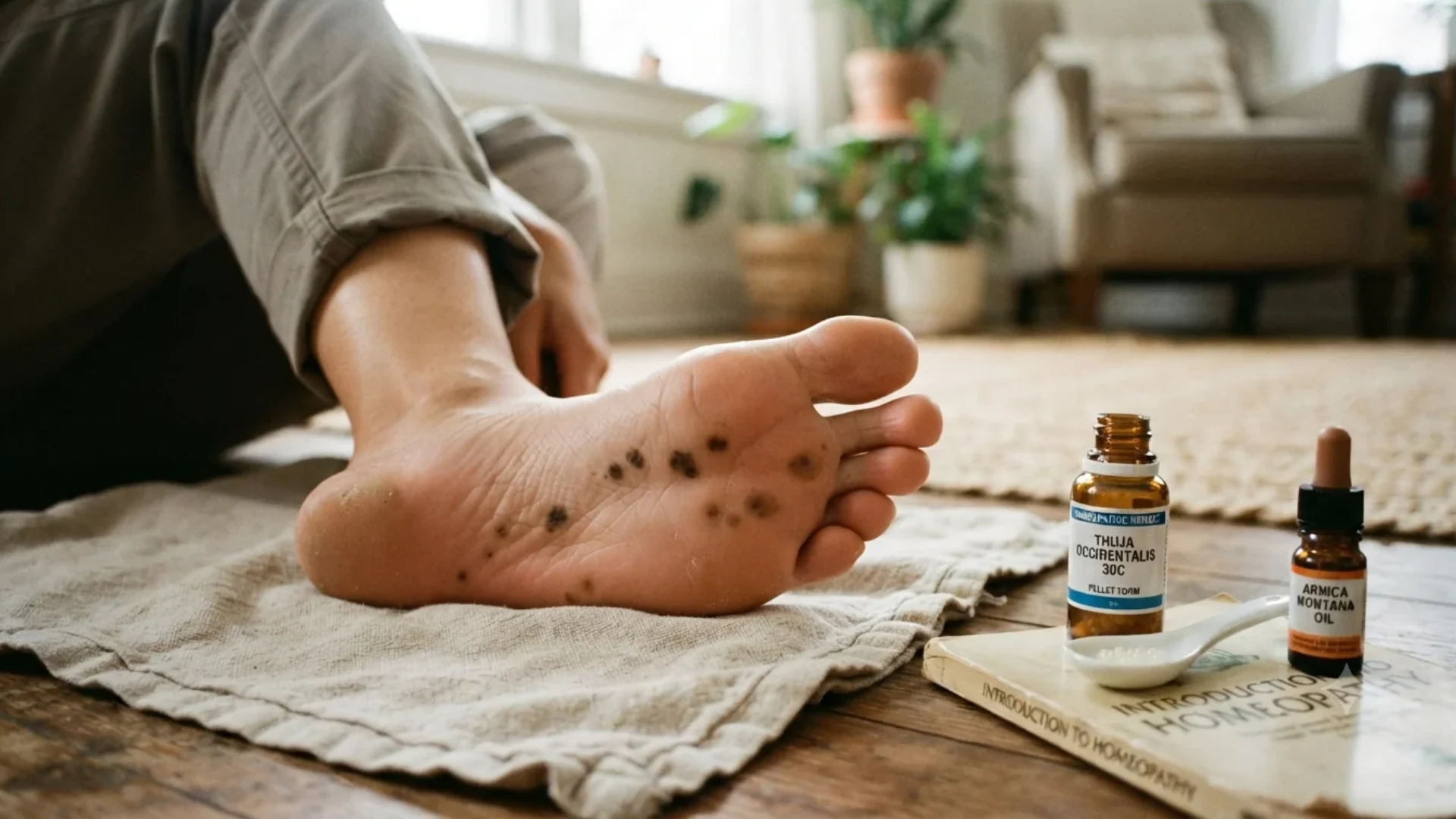
Tiny black dots on bottom of foot
Safe Home Care and Daily Foot Habits
These steps are safe while you wait for your appointment.
- Leave the spot alone: Do not cut, pick, burn, or scrub it.
- Skip strong acids: Wart acids can hide the true look of a dark spot.
- Take a photo: Place a coin beside the spot for size. Repeat weekly.
- Wear fitting shoes: Choose cushioned soles and clean cotton socks.
- Moisturize daily: Dry, cracked skin invites more problems.
- Dry between toes: This helps stop fungus.
- Check both feet monthly: Use a hand mirror or ask a family member. Include the soles, heels, and toenails.
- Never walk barefoot in public showers or pools. Warts spread there.
Athletes can reduce talon noir by using shoes that fit well and by changing worn insoles.
When to See a Doctor Today
Do not wait for a routine visit if you notice any of these.
- The spot is growing or darkening
- It bleeds, oozes, or forms a sore
- You have diabetes or poor blood flow
- The skin around it turns red, hot, or swollen
- You see a dark streak under a toenail
- You have a past or family history of melanoma
- The spot has lasted longer than four weeks
Black skin with a bad smell, pus, or fever is an emergency. Go to a hospital the same day.
The Bottom Line
Black spots on bottom of feet are common, and most are not dangerous. The few that are dangerous look a lot like the harmless ones. That is why a quick exam beats months of guessing.
Check your soles. Take a photo. Book a visit if the spot is new, changing, or will not fade. Let a homeopathic doctor guide your comfort and daily care, and let a skin specialist rule out cancer when needed. Your feet carry you every day. Give them five minutes of attention each month.
This article is for education and does not replace a medical exam. See a qualified doctor for any new or changing spot on your skin.
Frequently Asked Questions
Q: Is a painless black spot on the foot always cancer?
A: No. Most are bruises, warts, or talon noir. Cancer is rare. But you cannot tell by looking, so a check is the safe choice.
Q: Can black spots on the bottom of feet go away on their own?
A: Blood-based spots like talon noir fade in a few weeks. A spot that stays, grows, or darkens does not count as normal and needs a doctor.
Q: Can I scrape off a black spot at home?
A: No. A trained doctor can pare the top skin layer safely. Home scraping can cause infection and can hide clues.
Q: Can homeopathy remove a black spot on foot?
A: Homeopathy does not remove skin cancer. For harmless causes like warts or corns, some people use it for comfort. Get a diagnosis first and then discuss options with your doctor.
Q: How do I know if it is a wart or something else?
A: Warts break the skin lines, hurt when squeezed, and bleed in pinpoints when shaved. A dark flat spot with no pain and no line break needs a closer look.
Q: What kind of doctor checks black spots on the feet?
A: A dermatologist is best for dark spots. A podiatrist also helps. A BHMS doctor can examine you and refer you to the right specialist.