
Nowadays many people are looking for ways of natural treatment. They want treatments that focus on the whole body, not just the symptoms. Today, many doctors and patients are looking beyond traditional medicine for ways to strengthen the body’s immune system.
This search explains why the popularity of cardinal homeopathy is on the rise. This naturopathy system is based on certain prescribed rules. It provides an orderly path to a healthy life, in line with the goals of modern natural health.

Seven Cardinal Principles of Homeopathy
What is Cardinal Homeopathy?
Homeopathy is a system of natural medicine. It uses very low amount of natural substances to activate your body’s treatment system. The word cardinal means primary or essential.
Therefore, this practice relies on fixed, natural laws. Practitioners do not guess when they treat a patient. They follow a strict framework. This framework ensures that every treatment is safe and matches your exact needs.
Dr. Samuel Hahnemann created this system in Germany over two hundred years ago. He was a medical doctor who wanted a gentler way to treat illness. At that time, standard medical treatments were often harsh and dangerous. Dr. Hahnemann wanted to find a system that would work together with nature, not against it.
His research led to the formulation of a set of natural laws. These rules still guide physicians today. They show how nature and medicine can work together. Understanding these rules helps you make better choices for your health. It also shows how natural care fits into modern health systems.
The Seven Cardinal Principles of Homeopathy
To understand this medical system, we must look at the Seven Cardinal Principles of Homeopathy. Each principle serves a specific purpose. They work together to guide the practitioner to the right remedy. Here is a detailed explanation of how these rules work in actual care.
The Law of Similars
This is the most famous law of the system. People often state it as “like cures like.” It means a substance that causes symptoms in a healthy person can cure those symptoms in a sick person.
Think about chopping a fresh onion. Your eyes water and your nose runs. In homeopathy, a remedy made from onion can treat a cold with those exact symptoms.
Another example involves coffee. Drinking too much coffee causes alertness and racing thoughts. A remedy made from coffee beans can help treat insomnia. This law helps practitioners match your symptoms to a specific natural source. It focuses on the body’s unique reaction to the world.
The Law of Simplex
Modern medical treatments often use multiple drugs at the same time. This can cause confusion in the body. The 7 principles of homeopathy keep things simple. This law states that a doctor should give only one single remedy at a time.
Using one remedy allows the practitioner to see its direct effect. They can watch how your body responds without any interference. If you take multiple remedies at once, you cannot know which one worked. It keeps the healing process clear and easy to track. This simplicity makes the treatment safer for your body.
The Law of Minimum Dose
Many people worry about the side effects of strong drugs. This principle addresses that concern directly. It states that a practitioner must use the smallest dose possible to spark healing.
The remedy is diluted many times in a precise way. This process makes the medicine safe and non-toxic. The goal is to nudge your body into action. You do not need heavy doses to start the healing process. A small, gentle encouragement is also enough to make positive changes. It supports your body without overloading your organs.
Doctrine of Drug Proving
How do we know what a natural substance does to the human body? We learn through a process called drug proving. Healthy human volunteers take a substance under close supervision.
These testers record every physical and mental change they experience. These detailed records form a massive guide for practitioners. Homeopathy does not rely on animal testing. It relies on real human experiences. This makes the data highly accurate for treating human patients. There is a clear, documented history of the effects of each treatment.
Theory of Chronic Diseases
Some diseases re-emerge from year to year. Dr. Hahnemann wanted to know why this happens. They realized that there are deep, underlying causes behind these chronic problems.
These factors are called Miasms. They act like quiet weaknesses in your body. The 7 laws of homeopathy look beyond your daily symptoms. This theory helps practitioners find the root cause of long-term health issues. Its aim is to remove the deep weakness of the body so that the disease does not recur. It’s necessary for long-term health.
Theory of Vital Force
Your body has an internal energy that keeps you alive. You can think of it as your life force or your immune system. When this force is strong, you stay healthy.
When your vital force gets out of balance, you fall sick. The sickness is just a sign of this inner imbalance. Homeopathic remedies do not fight the sickness directly. Instead, they boost your vital force. When your inner energy is balanced, your body naturally fixes yourself. This theory focuses on strengthening your own power to fix.
Law of Individualization
No two people experience a disease in the same way. Two people might have the same cold. Yet, one feels hot and wants cold water. The other feels chilly and wants warm tea.
The 7 principles of homeopathy state that the doctor treats the person, not just the disease. Your remedy fits your exact physical and mental state. It is a highly personalized form of care. Doctor considers your entire life, habits and emotions before making a choice of treatment. This ensures the treatment matches you perfectly.
Why These Principles Matter to Modern Holistic Medicine
Modern medicine is great for emergency care and surgery. Still, many people struggle with chronic pain, stress, and long-term fatigue. The core rules of homeopathy offer a safe way to fill these gaps.
Personalized Care in a Standard World
Most modern clinics use a one-size-fits-all plan. They give the same drug to everyone with the same label. Homeopathy values your unique body. It respects your personal symptoms. This makes it a perfect fit for the goals of holistic medicine. It treats you as a whole person, not as a disease label.
A Safe Option for Everyone
Many standard drugs come with warning labels. They can cause unwanted side effects. Some can even lead to dependency. Because homeopathy uses tiny doses, the remedies do not cause these issues. It is safe for babies, pregnant women and the elderly. Because of this protection it is an excellent choice for family health.
Focusing on the Root Cause
Taking painkillers does not cure the root cause of the problem. It only hides the symptoms. Homeopathy aims to treat the root of the problem. By balancing your vital force, it helps you achieve real, long-term health. It helps the body fix itself instead of just masking the pain.
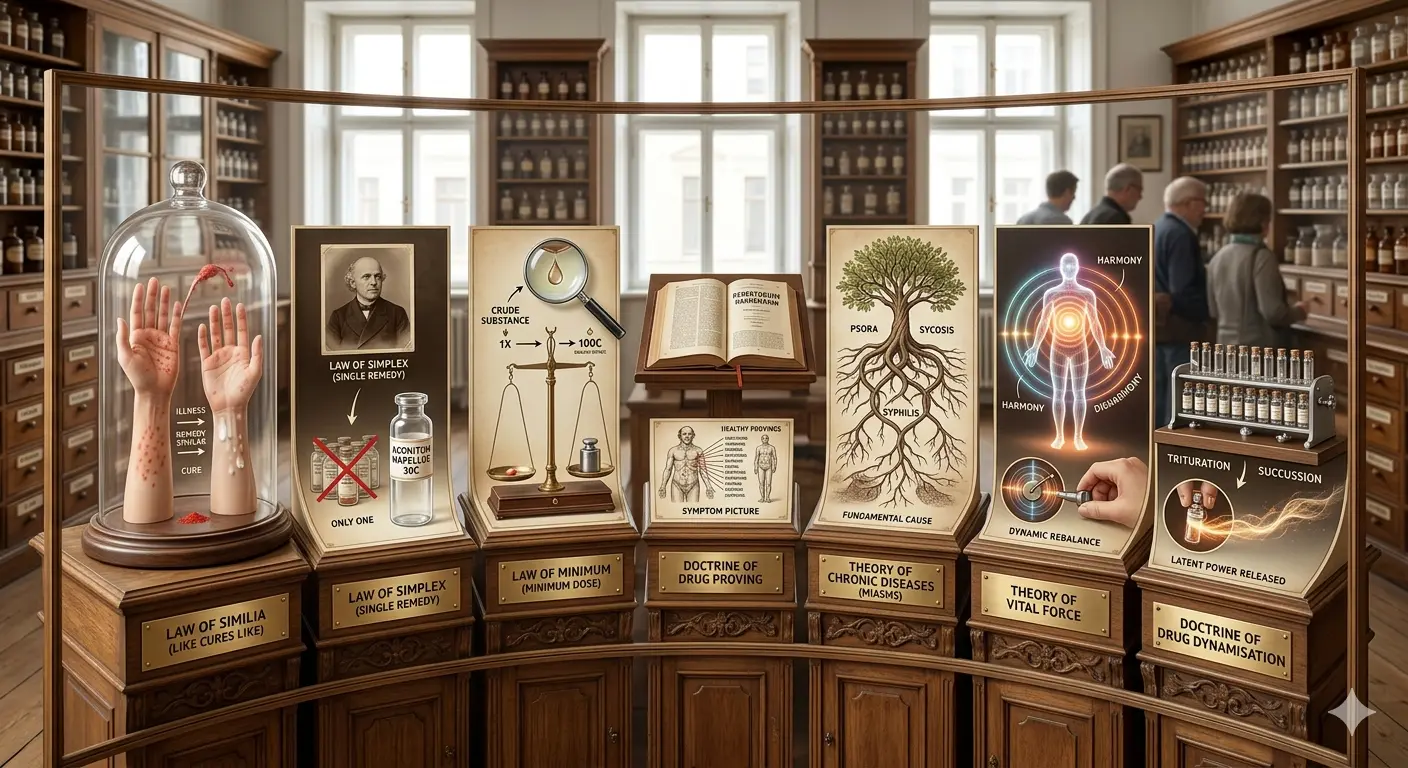
Seven Cardinal Principles of Homeopathy
How to Choose a Homeopathic Practitioner
If you want to try this system, look for a qualified professional. A good practitioner will spend a lot of time with you. Your first visit might last over an hour.
They will ask about your sleep, your stress, and your favorite foods. They will want to know how you react to cold weather. This deep interest shows they respect the classic laws of healing. Make sure they follow the core rules of the system. A trained professional will always seek to find your unique remedy.
Conclusion
The laws of natural healing are not outdated ideas. They are timeless truths that help us understand health. Focusing on the whole person, in small amounts and with the necessary energy, they guide us towards true health. These ideas remain extremely valuable in the search for safer and more personalized health care. They provide a reliable path to health, respecting the intelligence of the body.
Frequently Asked Questions
Q: What are the 7 principles of homeopathy?
A: They are Similars, Simplex, Minimum Dose, Drug Proving, Chronic Diseases, Vital Force, and Individualization.
Q: Are homeopathic remedies safe to take with standard medicine?
A: Yes. Homeopathic remedies do not interfere with standard medicines. Talk to your doctor before starting any new treatment.
Q: How long does it take for homeopathy to work?
A: Acute problems are resolved within a few hours. Long-term health problems can take several weeks or months to fully heal.
Q: Can babies and children use homeopathy safely?
A: Yes. The highly diluted remedies are safe and non-toxic for infants and growing children.
Q: Why does a homeopath ask so many personal questions?
A: They must match the remedy to your unique personality, lifestyle, and physical symptoms.